Business Automation: Creating Flow, Freedom, and Sustainable Growth
As a business grows, something subtle begins to happen. What once felt manageable slowly becomes overwhelming. Small tasks pile up. Follow-ups take longer. Systems that once worked smoothly begin to feel heavy. And without realizing it, more time is spent managing the business than actually growing it. This is where business automation becomes not just helpful — but essential.
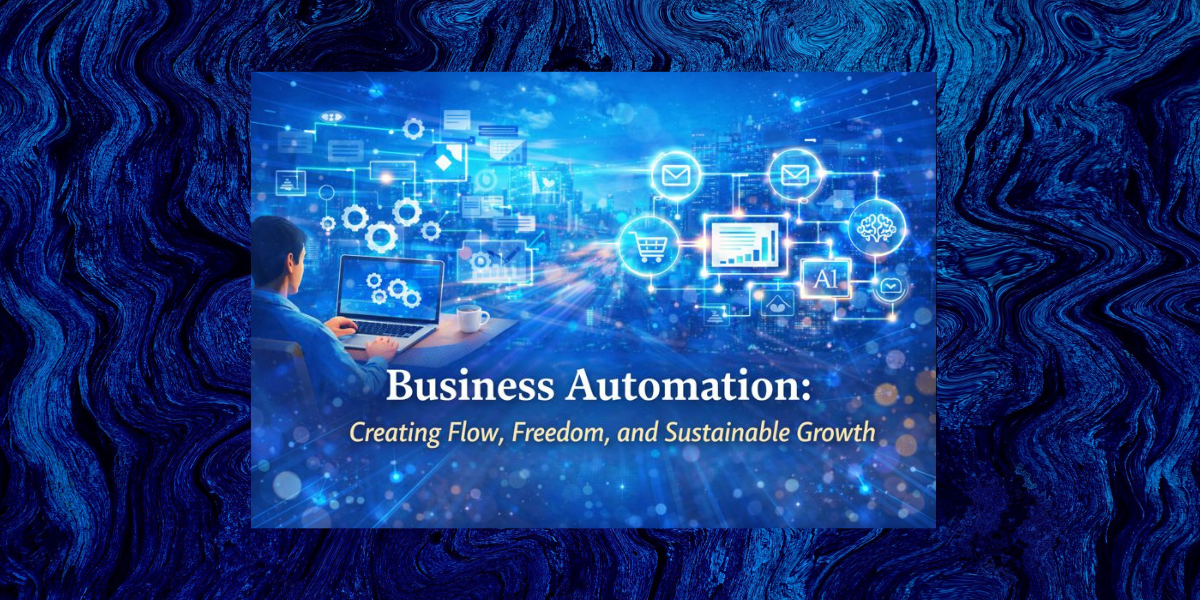
Business Automation: Creating Flow, Freedom, and Sustainable Growth
As a business grows, something subtle begins to happen.
What once felt manageable slowly becomes overwhelming. Small tasks pile up. Follow-ups take longer. Systems that once worked smoothly begin to feel heavy. And without realizing it, more time is spent managing the business than actually growing it.
This is where business automation becomes not just helpful — but essential.
Automation isn’t about replacing people or removing the human touch. It’s about removing friction, restoring focus, and creating space for the work that truly matters.

Why Manual Work Becomes a Hidden Bottleneck
In the early stages of a business, doing things manually often feels efficient. You know every detail. You respond personally. You keep things moving through effort and attention.
But as momentum builds, those same tasks begin to drain energy instead of creating momentum. Repetitive actions quietly consume time. Simple processes demand constant attention. And before long, growth starts to feel heavy rather than exciting.
This is where many businesses stall — not because of a lack of opportunity, but because their systems can’t support their pace.
Business automation exists to remove these hidden bottlenecks.
What Business Automation Really Means
Automation isn’t about turning your business into a cold machine. It’s about creating flow.
When implemented thoughtfully, automation allows systems to work quietly in the background. Workflows trigger actions without manual input. Data moves where it needs to go. Communication happens at the right time, without being forced or robotic.
Tasks that once required constant attention begin to take care of themselves. Not because people are removed from the process — but because their energy is used more intentionally.
Automation doesn’t replace judgment, creativity, or human connection. It protects them.
Creating Space for What Matters Most
When repetitive work fades into the background, something meaningful begins to happen.
People regain the space to think.
To create.
To connect.
Instead of reacting to endless tasks, teams can slow down just enough to focus on what actually moves the business forward — improving experiences, strengthening relationships, and solving real problems that matter.
This shift quietly changes everything. Work feels lighter. Decisions become clearer. Energy moves away from maintenance and toward progress.
Business automation isn’t about doing more for the sake of productivity.
It’s about creating space for the work that truly matters — and allowing it to happen with intention, clarity, and calm.
How Automation Supports Sustainable Growth
Sustainable growth requires systems that can handle change without breaking. Automation helps create that stability by ensuring processes run smoothly regardless of scale.
As your business grows:
-
Workflows adapt without becoming chaotic
-
Communication remains clear and consistent
-
Tasks are completed accurately and on time
-
Teams can focus on higher-value contributions
This creates confidence — not just internally, but for customers as well. Consistency builds trust, and trust builds long-term relationships.
Automation That Feels Human
One of the biggest misconceptions about automation is that it removes warmth. In reality, good automation enhances the human experience.
By handling repetitive work, automation frees people to show up more fully where it matters most. Conversations become more meaningful. Responses feel thoughtful instead of rushed. Interactions become intentional rather than reactive.
The goal isn’t to replace people — it’s to support them.
When automation is designed with care, it creates space for empathy, creativity, and connection.
From Effort to Flow
Business automation allows you to move from constant effort to sustainable flow.
Instead of pushing harder, your systems begin to support you. Instead of managing chaos, you guide growth. Over time, the business becomes easier to run — not because it’s smaller, but because it’s smarter.
This is the quiet power of automation: it works in the background, enabling consistency, clarity, and calm.
A Smarter Way Forward
Business automation isn’t about complexity or control. It’s about freedom — freedom to focus on strategy, relationships, and meaningful progress.
When systems work together seamlessly, your business gains resilience. It becomes capable of growing without burnout, adapting without disruption, and evolving without losing its soul.
That’s the true promise of automation: not speed for the sake of speed, but stability, confidence, and long-term growth.
Final Thought
Automation doesn’t replace the human element — it protects it.
When done well, it gives your business room to breathe, think, and grow with intention. And that’s where lasting success truly begins.
🚀 Ready to Turn Chaos into a Working Business System?
You don’t need more tools.
You need one system that brings everything together.
BDM Hub helps you:
-
Turn ideas into structured systems
-
Automate repetitive work
-
Connect marketing, sales, and operations
-
Build a business that runs with clarity — not chaos
Whether you’re just starting or scaling what you’ve already built, BDM gives you the structure to move forward with confidence.
✅ What You Can Do Next
Start with clarity. Build with intention. Grow with confidence.
👉 Download My Free Book Chaos to Clarity
See how all the pieces fit together in one connected system.
Tags
Christo Fouche
Contributing writer at BDM Hub, covering business management, productivity, and technology trends.
Related Articles
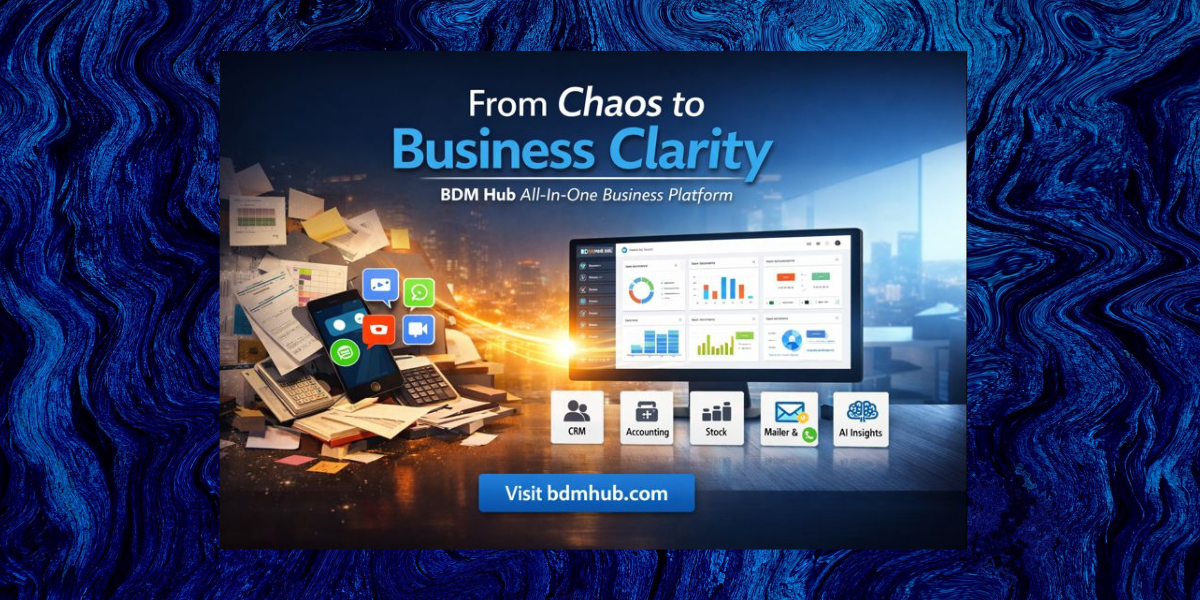
Building a Business You Can Finally Understand — BDM Hub
Most owners imagined they would grow into leadership. Instead they grew into administration. The first hours of the day are spent hunting for information: who must be called back, which quote was sent, what the bank balance really is, and on which phone the client conversation actually happened. By the time the real work should begin, mental energy is already gone. Christo Fouché describes this as the hidden tax on small business — the cost of not having one mind for the business.
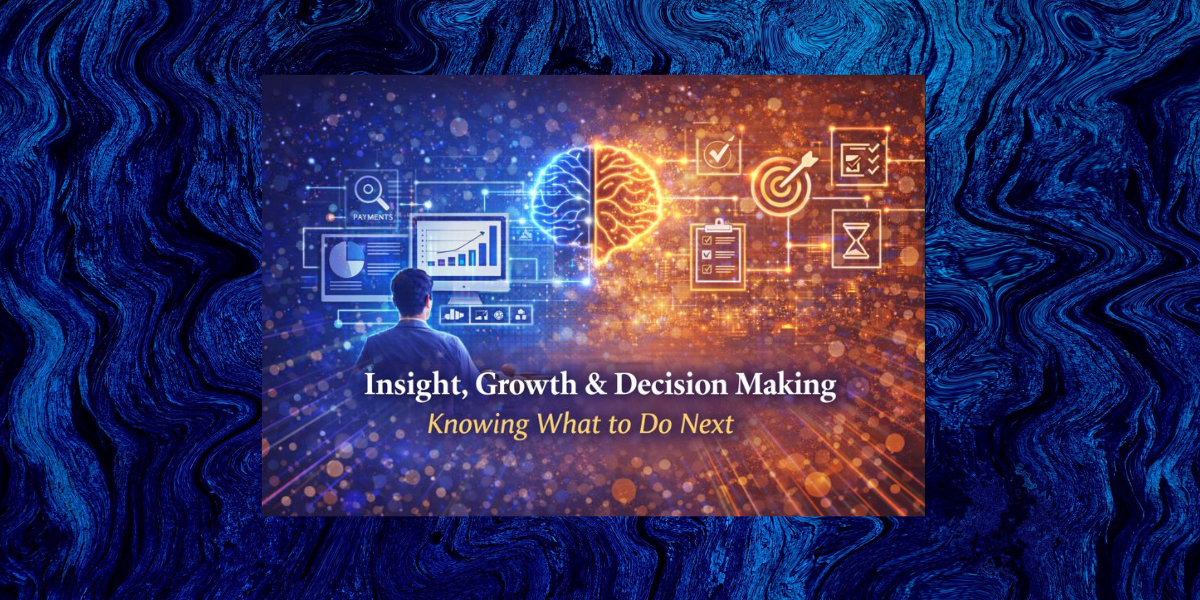
Insight, Growth & Decision Making
Most small businesses don’t struggle because they lack effort or ambition. They struggle because decisions are often made in the dark. When information is scattered across tools, spreadsheets, inboxes, and conversations, it becomes difficult to see what’s really happening. Decisions end up being driven by instinct, urgency, or whatever feels most pressing in the moment. Sometimes that works. Often, it creates uncertainty, stress, and second-guessing. This is where insight changes everything.
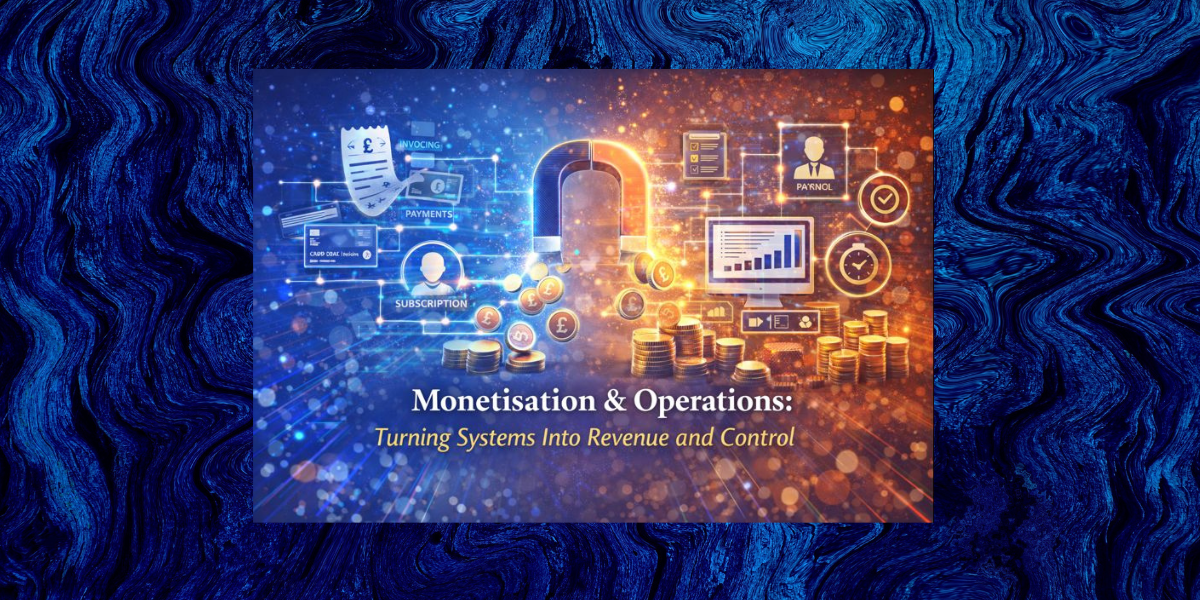
Turning Systems Into Revenue and Control
Growth is exciting — until it becomes overwhelming. At first, more customers and more sales feel like success. But without the right structure behind the scenes, that growth can quickly turn into stress. Payments get harder to track. Admin piles up. Decisions start taking longer. And instead of feeling in control, the business begins to feel heavier with every new opportunity. This is where monetisation and operations quietly become the foundation of sustainable growth.